Achieve a 3rd Grade Reading Level: Our 2026 Guide
Explore what a 3rd grade reading level means. Our 2026 guide offers benchmarks, sample texts, and tips to help your child love reading and succeed.

Your child curls up with a longer book for the first time, and something shifts. They aren't just sounding out short school texts anymore. They're following a story, caring about characters, and asking to read one more chapter before bed.
That moment is exciting, but it can also be confusing. A child may look like a strong reader because they read quickly and willingly, yet still miss key details, guess unfamiliar words, or finish a page without really understanding what happened. That tension sits right at the heart of the 3rd grade reading level.
For many families, this stage isn't mainly about a score. It's about whether reading starts to feel rich and enjoyable. When comprehension grows, books open up. When it doesn't, even lovely stories can turn into work.
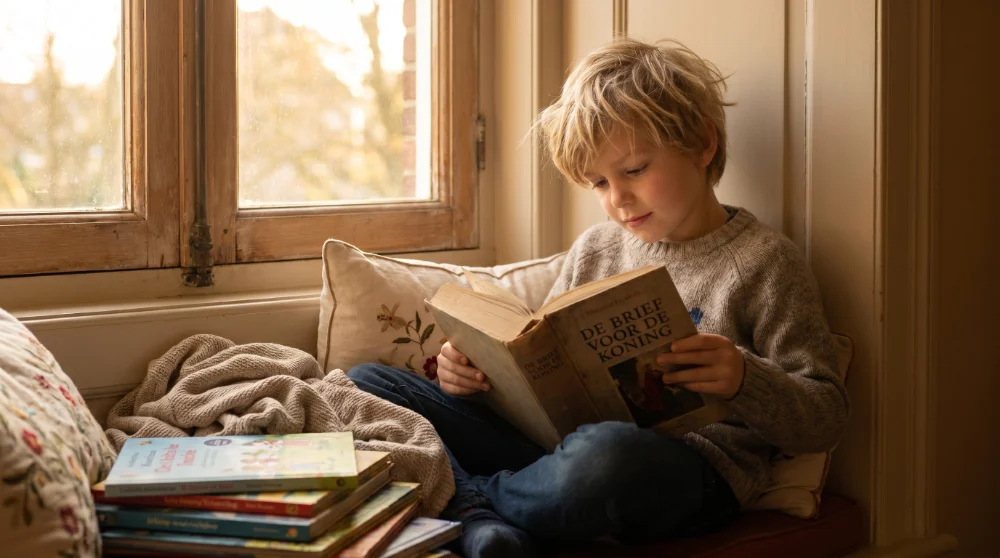
Table of Contents
- The Magic of Chapter Books and a New Reading Challenge
- What a 3rd Grade Reading Level Actually Means
- A Sample 3rd Grade Passage and Questions
- Signs Your Child Is on Track and Common Hurdles
- Activities to Build Stronger Comprehension Habits
- From Reading Words to Loving Stories
The Magic of Chapter Books and a New Reading Challenge
Near the end of Grade 2, many children stop seeing books as something mostly handed to them by adults. They begin to choose. One child reaches for Matilda. Another wants The BFG. Another keeps going back to animal stories, funny books, or anything with mystery and adventure.
That choice matters. It's often the first time reading becomes personal.

I've seen this stage many times in classrooms and at kitchen tables. A child suddenly wants a “real book” with chapters. They like holding a thicker book. They like remembering what happened yesterday and picking up the story again today. That growing independence is one of the best signs that reading is becoming part of who they are.
But this is also where the work changes. Third grade is the point where reading shifts from learning to read to reading to learn, and literacy guidance tied to Chapin Hall's findings notes that third-grade reading level is a significant predictor of later outcomes such as eighth-grade reading performance, with reading above grade level in third grade associated with higher college enrollment later on, as described by the International Dyslexia Association summary of this transition.
Reading starts to become enjoyable when a child can stay inside the story instead of fighting through every sentence.
That's why parents often notice two things at once:
- A new enthusiasm: Their child picks up books without being told.
- A new strain: They rush, skip, guess, or miss what the story is saying.
A child can be fascinated by books and still need help. That's normal. Chapter books ask for more stamina, more memory, more vocabulary, and more attention to detail than the short texts many children read earlier.
If your child is moving toward longer stories, you're not just watching an academic milestone. You're watching the beginning of reading for pleasure. Protecting that spark matters. The best support at this stage doesn't take the joy out of books. It helps children understand stories well enough to enjoy them fully.
What a 3rd Grade Reading Level Actually Means
A 3rd grade reading level isn't one single skill. It's a combination of fluency, accuracy, vocabulary, and comprehension working together.

Longer texts ask for more than decoding
In the early years, many children can succeed by reading short sentences and identifying straightforward information. By third grade, the text itself changes. Sentences get longer. Stories stretch across more paragraphs. Children meet more multi-syllable words, and the meaning isn't always stated directly.
A child reading at this level can usually do several things at once:
- Handle longer sentences: They can follow sentences with more than one idea in them.
- Read longer words without panic: They may not know every word, but they don't fall apart when they see one.
- Track a plot across time: They remember what happened earlier and connect it to what happens next.
- Answer questions from the text: They can explain who did what, why it happened, and what details matter.
- Reread when needed: If something doesn't make sense, they can go back instead of guessing and moving on.
That last point matters more than many parents realize. Strong readers at this stage aren't perfect readers. They're readers who notice confusion and repair it.
Practical rule: If your child can read a longer passage, pause, look back, and answer questions without much support, they're showing the habits that matter most at this level.
Useful benchmarks without over-focusing on them
Benchmarks can help if you treat them as rough reference points, not as a verdict on your child. One widely cited definition places a 3rd-grade reading level at about 570L on the Lexile scale and a fluency range of roughly 107 to 162 words per minute, according to this overview of common 3rd-grade reading benchmarks. The same source explains an important cause-and-effect point: when fluency is below benchmark, children spend so much effort on word recognition that they have less attention left for meaning.
That's why some children can “read the words” but still struggle to tell you what the passage meant.
A simple way to think about 3rd grade reading level is this:
| Skill area | What it looks like in real life |
|---|---|
| Fluency | Reading sounds fairly smooth, not painfully choppy |
| Accuracy | Fewer guesses, more careful word reading |
| Stamina | Staying focused through a full short story or chapter |
| Comprehension | Talking about events, motives, and important details |
If you're unsure where your child falls, a structured reading level test for children can give you a useful starting point. The key is to use the result as guidance, then watch what happens during actual reading. That's where the clearest signs appear.
A Sample 3rd Grade Passage and Questions
A short story at this level usually looks simple at first glance. The vocabulary isn't highly academic. The plot is clear. The sentences are manageable. But the main task isn't just pronouncing the words. It's holding the story together in your head while you read.

Sample passage
Here is an adapted example of a typical 3rd grade passage:
Mila was on holiday in Canada with her little brother Noah and their parents. They were traveling in a camper van. They loved sleeping in beautiful places in nature and seeing something new each day.
Still, Mila and Noah also felt a little nervous. They had heard that bears live in Canada.
“What if we see a bear?” Noah asked.
Dad laughed. “Then just sing loudly,” he said. “Maybe the bear will run away!”
Mila started singing right away, and everyone laughed. After that, they often sang in the camper for fun. They practiced just in case they ever saw a real bear.
For days, they looked carefully around them. At the forest, by the river, and at the campsite. But they didn't see a bear anywhere.
Then, in the last days of the holiday, they saw a long line of camper vans stopped by the road. Dad stopped too.
“Look over there,” Mom whispered.
In the distance, a bear was walking through the grass. It sniffed around calmly and didn't seem afraid at all. Mila and Noah stared with wide eyes.
“A real bear,” Noah whispered.
They stayed safely inside the camper van. Nobody got out. But they thought it was amazing to see such a beautiful bear in the wild.
And singing? Luckily, they didn't need to.
What the questions are really checking
Questions after a passage reveal whether a child is building meaning as they read.
Try these:
- Who-question: Who was Mila on holiday with in Canada?
- Why-question: Why did Mila and Noah often sing in the camper van?
- Multiple choice: What did they see near the end of the holiday?
- an elk
- a bear
- a fox
- Prediction question: What do you think Mila and Noah would do next time if they saw another bear?
- Feeling question: How do you think Noah felt when he saw the bear? Explain your answer.
Each question checks something different.
- The who-question checks literal recall.
- The why-question checks whether the child can connect cause and effect.
- The multiple-choice item checks attention to detail.
- The prediction question checks whether the child can use story logic.
- The feeling question checks inference and emotional understanding.
A child who only decodes may answer the first one. A child who comprehends can usually handle the rest with some explanation. That's the heart of this level. Reading becomes less about saying the text and more about thinking with it.
Signs Your Child Is on Track and Common Hurdles
Parents often ask the right question in the wrong way. They ask, “Is my child at a 3rd grade reading level?” What they usually mean is, “When my child reads, does it look healthy and sustainable?”
That's a better question.

What on-track reading often looks like at home
Children who are settling into this level often need less prompting than they used to. They pick up a book on their own. They read a text more calmly. They ask fewer questions about every long word. They can usually tell you what happened without needing the whole story fed back to them.
A practical home checklist looks like this:
- Independent interest: Your child sometimes chooses a book, magazine, or story without being pushed.
- Steadier reading: They don't race through every page just to finish.
- Basic retelling: They can explain the main events in order.
- Text-based answers: When you ask a question, they can often point to the part that helped them answer.
These aren't flashy signs, but they're strong ones. They show that the child is moving from dependence toward real reading control.
What deserves a closer look
Some reading behaviors look minor at first but usually signal that comprehension isn't keeping up.
Watch closely if your child:
- Rushes through books: Fast isn't always fluent. Sometimes it's avoidance.
- Guesses at words: Especially longer words, based on the first letter or the picture in their head.
- Misses important details: They finish a page but can't tell you who said what or why something happened.
- Avoids looking back: They'd rather guess than reread.
- Sounds fine but understands little: This is common and easy to miss.
If a child keeps moving without understanding, they don't get practice in real reading. They get practice in pretending to read.
The reason adults take this stage seriously is not to scare families, but to act early. A widely reported study summarized by Project Baltimore found that 23% of below-basic third-grade readers were likely to drop out of high school, compared with 4% of proficient readers, as described in this report on the long-term effects of struggling to read by third grade.
If several of these warning signs sound familiar, this guide to 7 signs of reading comprehension difficulty and what helps can help you sort out what you're seeing. The main thing is, don't wait for the problem to become dramatic. Small patterns repeated daily are what matter.
Activities to Build Stronger Comprehension Habits
When a child struggles at this stage, the answer usually isn't “read more” in a vague sense. The answer is to build better reading habits during short, manageable moments. A good activity makes the child slow down, notice the text, and prove understanding in a simple way.

For the child who rushes
Rushing often means the child is focused on finishing, not understanding. You don't fix that by lecturing them to “pay attention.” You give them a reason to read more carefully.
Try a comic-strip summary. After one short section, ask your child to draw three boxes:
- what happened first
- what happened next
- what happened last
This works because they can't draw the sequence unless they processed it.
Another simple option is the stop-and-title routine. After a page or two, ask, “What would you name this part?” A child who understood the section can usually give it a quick title such as “The bear appears” or “They practice singing in the camper.”
At home, shorter is often better: Ten focused minutes with a clear task usually helps more than a long session full of reminders.
For the child who guesses words
Guessing is one of the most common habits at this level. The child sees the first part of a long word, fills in the rest, and keeps going. That habit damages both accuracy and meaning.
Use a word detective game:
- Pick one tricky word from the passage.
- Cover it and reveal it bit by bit so your child has to look at the whole word.
- Ask what clues in the sentence help with the meaning.
- Reread the full sentence after the word is solved.
You can also ask, “Does that word make sense here?” That small question teaches self-checking, which is more useful than immediately supplying the answer.
A lot of parents find it helpful to have structured prompts ready rather than inventing them on the spot. This collection of reading comprehension practice ideas for home gives useful examples you can adapt to your child's level.
Here's a short video that shows the kind of calm, guided support many children respond well to:
For the child who forgets what they read
Some children read accurately enough but don't retain much. By the end of the page, the beginning has disappeared from memory. In those cases, comprehension practice should focus on holding onto meaning.
A strong activity is story expert. After reading, your child explains the text to a sibling, other parent, or grandparent. Give them three prompts:
| Prompt | Why it helps |
|---|---|
| Tell what happened | Builds sequence |
| Tell why it mattered | Builds cause and effect |
| Tell your favorite part | Builds engagement and interpretation |
Another useful habit is text evidence hunting. If your child answers a question, follow up with, “Show me where you found that.” That encourages rereading and moves them away from random guessing.
Finally, don't underestimate read-aloud discussion, even for children who can read independently. Shared reading gives you a chance to model what good readers do naturally:
- Pause for meaning: “Wait, why did he do that?”
- Look back: “Let's check that line again.”
- Connect details: “So that explains what happened earlier.”
- Notice feelings: “She says she's fine, but does she sound fine?”
These habits are what turn fluent word reading into actual understanding. Once that happens, pleasure reading gets easier because the child isn't just getting through a book. They're living inside it.
From Reading Words to Loving Stories
A 3rd grade reading level matters because it gives children access. Access to longer stories, funnier characters, richer ideas, and that wonderful feeling of disappearing into a book for a while.
Parents sometimes worry that working on comprehension will make reading feel like schoolwork. It doesn't have to. Good support does the opposite. It helps a child slow down enough to understand, and once they understand, reading becomes more satisfying.
The goal isn't to produce a child who can race through pages or hit one neat label. The goal is a child who can read a story, notice the details, follow the plot, think about the characters, and want to keep going.
If your child is still developing those habits, that doesn't mean they're failing. It means they're in the middle of learning one of the most important reading shifts of childhood. With calm practice, careful guidance, and books that genuinely interest them, many children grow into confident readers who don't just read words. They love stories.
If your child can already read fluently but struggles to remember, explain, or really understand what they read, ReadLab offers short, structured comprehension practice built around real stories. It's designed to help children slow down, look back in the text, answer with evidence, and build the habits that make reading both stronger and more enjoyable.